
For most business owners, taxes are viewed as a compliance requirement — something to file, pay, and move on from. But from an underwriting and funding perspective, tax errors are not just administrative mistakes. They are financial signals.
And in many cases, they directly impact loan approvals, creditworthiness, funding amounts, interest rates, and lender confidence. What appears to be a minor tax oversight can translate into thousands — or even hundreds of thousands — in lost capital access.
Your tax profile is part of your underwriting profile. What you report to the IRS directly shapes what lenders see — and what they're willing to offer.
The Real Cost of Tax Errors
Tax mistakes don't just result in penalties from the IRS. They create downstream financial consequences that affect how lenders evaluate your business:
- Reduced borrowing capacity
- Increased risk classification
- Delayed funding timelines
- Additional documentation requirements
- Higher decline rates from lenders
Most Common Tax Errors That Impact Funding
1. Underreporting Income
While some business owners attempt to minimize tax liability by reducing reported income, this approach backfires when seeking financing. Lenders evaluate your ability to repay based on documented income. Lower reported income = lower approval potential, smaller loan amounts, and possible automatic declines.
2. Excessive or Misclassified Deductions
Aggressive deductions may reduce taxable income — but they can also make your business appear unprofitable on paper. This is especially problematic for SBA loans, term loans, and lines of credit. The result: weak or negative net income and reduced DSCR (Debt Service Coverage Ratio).
3. Inconsistent Financial Reporting
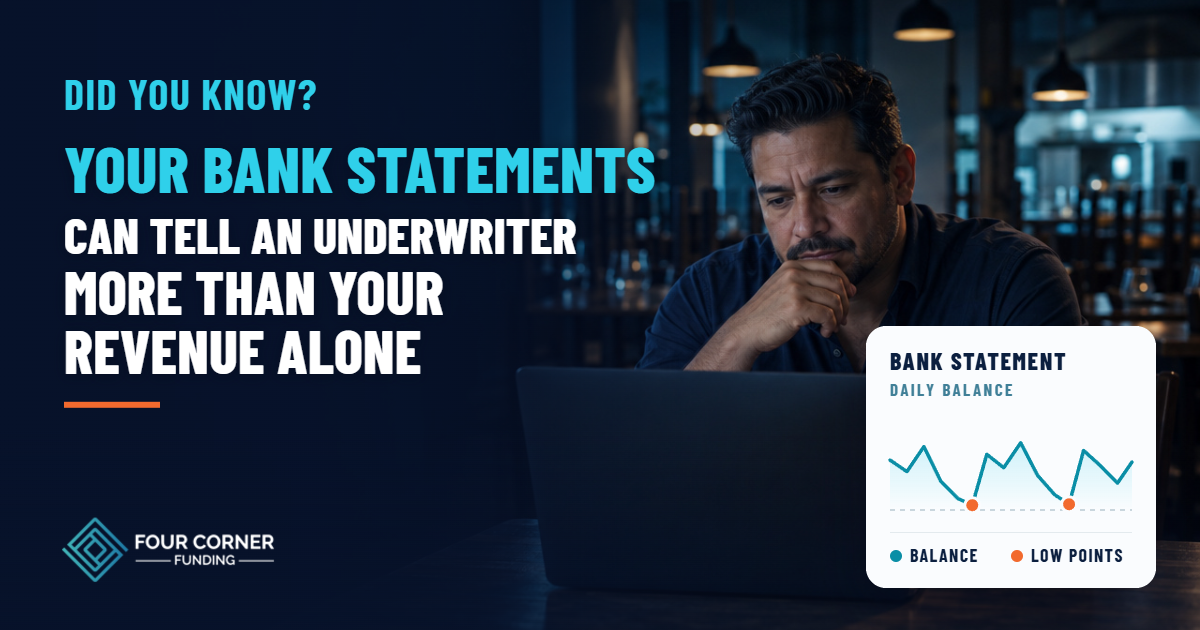
When your tax returns don't align with bank statements, Profit & Loss statements, or merchant processing data — it creates red flags. Underwriters are trained to detect inconsistencies quickly, causing file delays and loss of credibility.
4. Late or Unfiled Tax Returns
Failure to file taxes on time is one of the fastest ways to block funding eligibility. Many lenders require the most recent 1–2 years filed with no outstanding gaps — and missing this leads to immediate disqualification for many programs.
5. Outstanding Tax Liabilities
Unresolved tax debt signals financial instability and increases perceived risk. Even small balances can trigger declined applications, required payment plans, and reduced funding amounts.
6. Incorrect Business Structure Reporting
Filing under the wrong structure — or inconsistently between years — creates compliance flags, approval delays, and additional verification requirements with underwriters.
How Lenders Actually View Your Taxes
From a lender's perspective, your tax returns answer three core questions:
- 1 Does this business generate consistent income?
- 2 Is the income stable and verifiable?
- 3 Can the business support new debt obligations?
If your tax filings weaken those answers, your funding outcome suffers — regardless of your actual cash flow.
The Underwriting Reality Most Businesses Miss
There is often a disconnect between tax strategy (minimize liability) and funding strategy (maximize approval strength). Optimizing for one without considering the other can hurt your long-term financial position.
The goal is not just to reduce taxes — it's to balance tax efficiency with funding eligibility.
How to Avoid Costly Tax Mistakes
- Work with professionals who understand lending requirements, not just tax filing
- Maintain consistency across all financial documents
- Avoid extreme income suppression strategies
- Resolve tax issues proactively before applying for funding
- Align your reporting with your future capital goals
Position Your Business the Right Way
At Four Corner Funding, we evaluate how your financial profile aligns with real underwriting standards. If you're planning to pursue funding, your tax structure should support that goal — not work against it.