
Funding Readiness · Day 19
The second thing you should fix before applying for funding
Most business owners focus on credit scores. But after business identity, the next thing lenders evaluate is something most owners never think about — their banking activity.
▶
▶ Watch the full video on YouTube
Craig Rice · Four Corner Funding · Day 19
Last week we covered why business identity is the first thing lenders and underwriters evaluate. Today we cover the second — and most business owners never see this one coming.
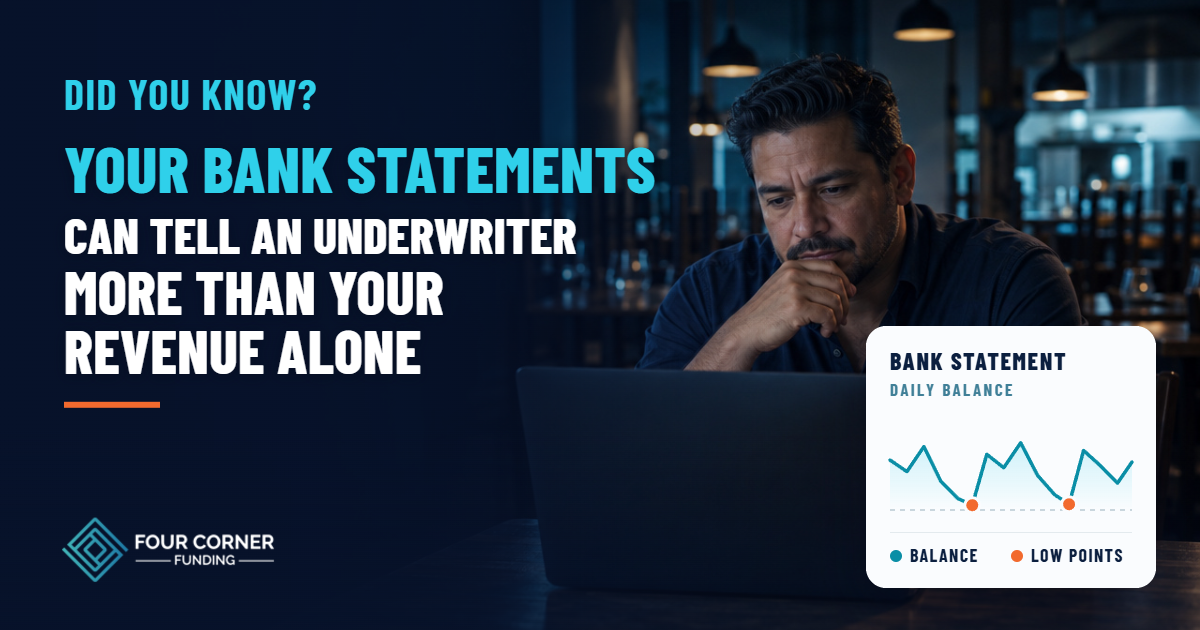
Your bank statements tell a story. The question is — is it a story that creates confidence, or a story that creates concern?
What is banking activity — and why does it matter?
Banking activity refers to everything happening inside your business bank account — deposits, balances, withdrawals, and overall cash flow patterns. When a lender pulls your bank statements, they are not just checking your balance. They are reading the entire financial story of your business.
⚠ A business with strong revenue but poor banking habits still creates underwriting risk. Revenue gets you in the door. Banking activity determines whether you walk through it.
What underwriters actually review in your bank statements
When a lender reviews your business bank statements, they are evaluating several specific factors that paint a picture of your financial stability.
Average Daily Balance Lenders want to see a healthy, consistent balance — not an account that spikes on deposit days and drops to zero immediately after. | Deposit Consistency Regular, predictable deposits signal a stable business. Irregular or lumpy deposits raise questions about revenue reliability. |
Negative Balance Days Days where your account goes negative are a significant red flag. Even one or two can create underwriting concerns depending on the lender. | NSF Activity Non-sufficient fund events tell a lender that the business is operating too close to the edge. Multiple NSFs can disqualify an otherwise strong application. |
Cash Flow Patterns Does money come in and go right back out? Lenders look for businesses that retain some liquidity — not just pass money through the account. | Overall Account Management How a business manages its banking reflects how it manages its operations. Lenders use this as a proxy for overall financial discipline. |
What strong banking looks like vs. what creates concern
✕ Creates Concern ✕ Frequent negative balance days | ✓ Creates Confidence ✓ Consistent positive balance |
How to clean up your banking before you apply
The good news is that banking activity is one of the most fixable areas of funding readiness. Here is what to focus on in the 90 days before applying for funding.
1
Stop mixing personal and business expenses
Every personal charge on your business account is a flag. Open a dedicated business account if you haven't already and keep all transactions strictly business-related.
2
Build and maintain a minimum balance cushion
Aim to keep at least one to two months of average expenses in your account at all times. This raises your average daily balance and eliminates negative day risk.
3
Deposit consistently — even smaller amounts regularly
Frequent, regular deposits look better than occasional large ones. If possible, structure your client payments to come in on a consistent schedule.
4
Eliminate NSF events immediately
Set up overdraft protection and low balance alerts. A single NSF event in three months of statements can raise questions. Multiple events can disqualify an application entirely.
5
Give yourself at least 90 days before applying
Most lenders review 3 to 6 months of bank statements. Give yourself at least 90 days of clean banking activity before submitting any funding application.
Clean banking creates confidence. And confidence is exactly what lenders are looking for before they say yes.
The businesses that access capital consistently are not always the ones with the highest revenue. They are the ones that have prepared every area of their financial profile — including their banking — before they ever apply.
Take the next step
Ready to evaluate your funding readiness?
Complete our Funding Readiness Assessment and discover potential strengths, gaps, and next-step recommendations before you apply.
✓ Business identity review ✓ Banking assessment ✓ Credit profile evaluation ✓ Fundability gaps ✓ Capital access opportunities