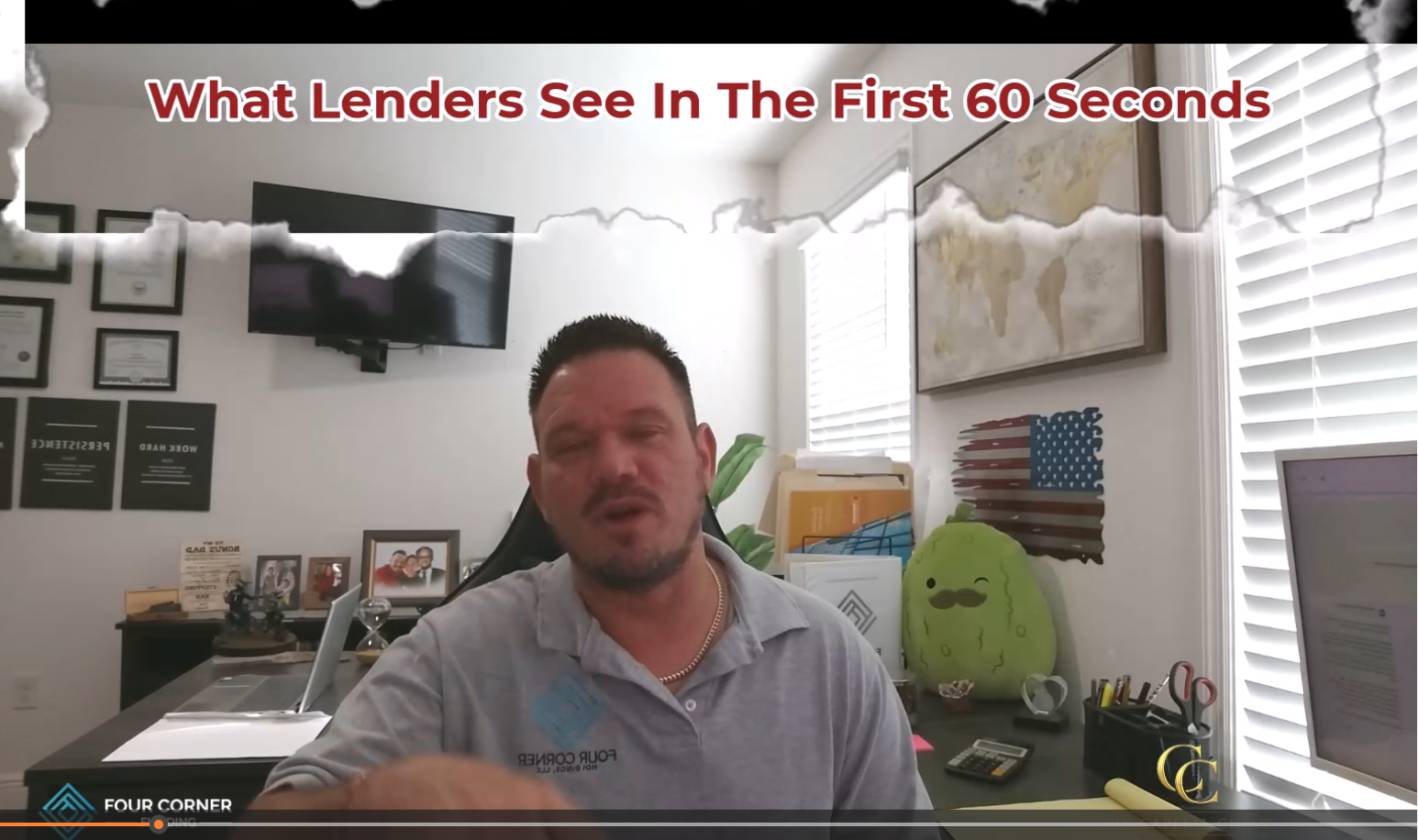
What Lenders See In The First 60 Seconds
Most business owners believe funding decisions are made after hours of analysis, lengthy underwriting reviews, and extensive document verification.
While thorough underwriting certainly happens, something important occurs long before a final decision is made.
Lenders often form an initial impression of a business within the first 60 seconds.
That first impression doesn't automatically determine approval or denial, but it can influence the direction of the entire review process.
The businesses that create confidence early often move through underwriting more smoothly.
The businesses that create confusion often face additional questions, document requests, and delays.
So what exactly are lenders looking for during those first moments?
🎥 Watch The Full Video
👉 https://youtu.be/wSBuign-g-4
First Impressions Matter
Just like customers form opinions about a company within seconds, lenders do the same.
The goal of those first moments is simple:
Determine whether the business appears legitimate, organized, and worthy of further review.
Lenders are not trying to find reasons to decline businesses.
They are trying to understand risk.
The faster they can understand a business and feel confident about its legitimacy, the better the overall experience tends to be.
The First Thing They Look For: Legitimacy
One of the first questions lenders ask is:
"Is this a real business?"
That may sound obvious, but lenders review thousands of applications.
They are constantly looking for signals that verify a company's existence and credibility.
Common legitimacy indicators include:
Professional business website
Professional email address
Business phone number
Business address
Business registrations
Licensing when applicable
The easier it is to verify these items, the more confidence a lender may have in the business.
Consistency Across Everything
After legitimacy comes consistency.
Lenders often compare information from multiple sources:
Funding application
Website
Business records
Supporting documents
Banking information
They want to see the same story everywhere.
For example:
If the application says the business provides consulting services, but the website focuses on construction, confusion is created.
If the address on the application differs from other records, questions arise.
If the business description changes depending on where it's viewed, additional verification may be required.
Consistency reduces uncertainty.
Understanding What The Business Actually Does
This is one of the most overlooked aspects of funding readiness.
Business owners understand their companies because they live them every day.
Lenders do not.
Within the first minute, a lender wants to answer a simple question:
"How does this business make money?"
If that answer is obvious, confidence increases.
If the answer is unclear, underwriting becomes more difficult.
The strongest businesses communicate:
What they do
Who they serve
How they generate revenue
Why customers buy from them
without creating confusion.
Identifying Risk Signals
Lenders also begin looking for potential concerns.
They may review factors such as:
Time in business
Industry type
Existing debt
Business structure
Credit profile
Banking stability
This doesn't mean they are searching for reasons to decline.
They are trying to understand whether the business aligns with the funding opportunity being considered.
Every funding decision involves risk assessment.
The goal is to determine whether the level of risk is reasonable.
Confidence Is The Real Goal
If there is one word that summarizes the first 60 seconds, it is:
Confidence.
Lenders want confidence that:
The business is legitimate
The information is accurate
The company is operating professionally
Revenue is genuine
Repayment is realistic
The businesses that create confidence quickly often experience smoother underwriting reviews.
The businesses that create uncertainty often face more scrutiny.
Why This Matters
Many business owners spend their time worrying about factors they cannot immediately change.
Instead, they should focus on the things they can control:
Business identity
Website quality
Professional presentation
Documentation
Consistency
Fundability
These factors help create confidence before underwriting even begins.
And confidence often leads to better funding outcomes.
The Real Lesson
Lenders are not simply reviewing numbers.
They are evaluating the overall picture.
Within the first 60 seconds, they are asking:
Is this business legitimate?
Is the information consistent?
Do I understand what this company does?
Are there obvious risk concerns?
Can I feel confident moving forward?
The businesses that answer those questions quickly often position themselves more favorably during the funding process.
Because before approvals happen, confidence happens.
Ready To Evaluate Your Funding Readiness?
A Funding Assessment can help identify potential strengths, weaknesses, and opportunities before you apply.
You may discover:
✔ Funding readiness gaps
✔ Business identity concerns
✔ Fundability opportunities
✔ Capital access strategies
👉 https://fourcornerfunding.com/pre-qualification?utm_source=blog&utm_medium=website&utm_campaign=first_60_seconds
The businesses that consistently access capital are often the businesses that prepare before they apply.