Why Businesses Get Denied for Funding (And How to Avoid It)
One of the biggest misconceptions in business funding is believing that approval decisions are based only on credit scores.
In reality, underwriting evaluates a much larger financial and operational picture.
Many businesses that apply for funding are denied because of preventable issues involving documentation, cash flow, business setup, or risk exposure.
Understanding these issues before applying can dramatically improve approval odds and reduce unnecessary denials.
Funding Denials Usually Come Down to Risk
Lenders and underwriting platforms evaluate one core question:
“Does this business present an acceptable repayment risk?”
That evaluation includes multiple factors, including:
- Revenue consistency
- Business stability
- Industry risk
- Bank activity
- Existing debt exposure
- Credit history
- Business legitimacy
- Cash flow trends
- Documentation quality
Even profitable businesses can be denied if operational or underwriting risks appear too high.
Common Reasons Businesses Get Denied
1. Insufficient Revenue
Most funding programs require minimum monthly or annual revenue thresholds.
Low or inconsistent deposits create concerns about repayment ability.
Underwriters typically review:
- Monthly deposits
- Revenue trends
- Negative balance frequency
- Deposit consistency
- Cash flow stability
Revenue quality often matters more than revenue size alone.
2. Excessive Existing Debt
Businesses already carrying heavy payment obligations may struggle to qualify for additional financing.
Underwriters analyze:
- Current loan payments
- Daily/weekly remittance exposure
- Debt stacking
- Cash flow strain
- Payment burden ratios
Too much existing debt can reduce approval strength significantly.
3. Poor Bank Statement Performance
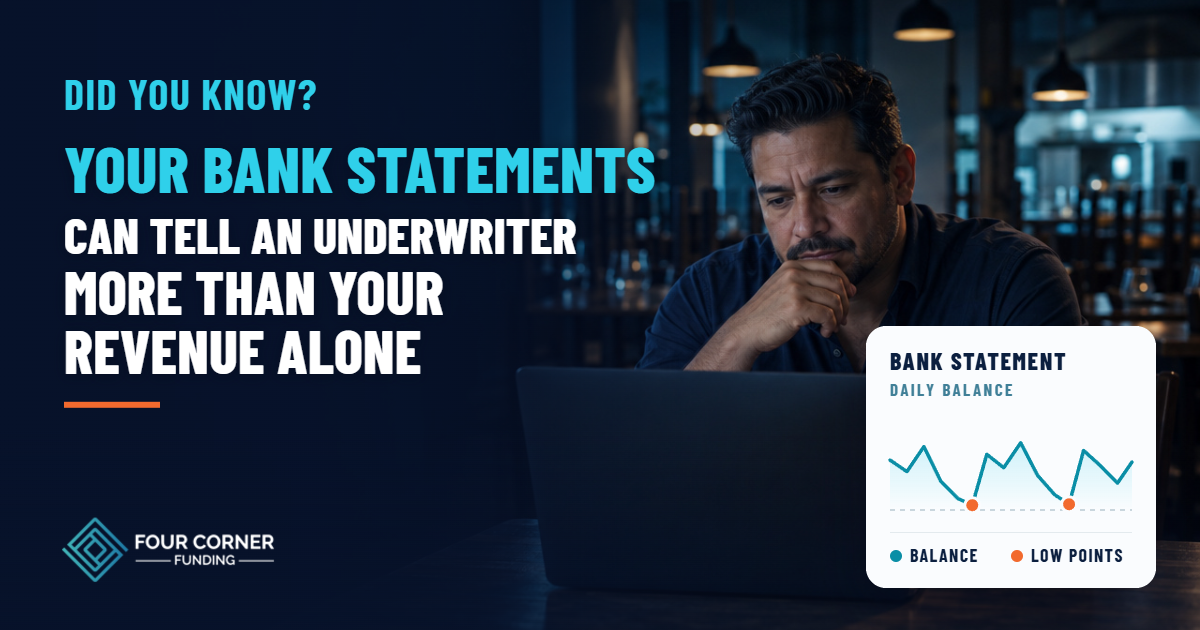
Bank statements are one of the most heavily reviewed underwriting documents.
Common red flags include:
- Frequent NSF activity
- Negative days
- Overdrafts
- Volatile balances
- Irregular deposits
- Gambling or high-risk transactions
Strong bank activity improves lender confidence.
4. Weak Business Structure
Many businesses are denied because they lack operational credibility.
Examples include:
- No business website
- Residential-only address
- Unprofessional email setup
- Inconsistent business information
- Missing licenses
- Poor online presence
Fundability matters more than most businesses realize.
5. Credit Challenges
While some programs are flexible, credit still impacts:
- Approval odds
- Maximum funding amount
- Rates and terms
- Down payment requirements
- Guarantee requirements
Both personal and business credit may be reviewed depending on the funding type.
6. Applying for the Wrong Type of Funding
Not every business qualifies for every funding product.
For example:
- Startups typically do not qualify for large SBA loans
- High-risk industries may face restrictions
- New businesses may not qualify for unsecured products
- Seasonal businesses may require specialized underwriting
Funding strategy matters.
How to Improve Approval Odds
Businesses can improve approval readiness by focusing on:
Strengthening Revenue Stability
- Improve deposit consistency
- Reduce negative days
- Separate personal and business finances
- Maintain stronger average balances
Improving Fundability
- Professional website
- Business email
- Commercial address
- Consistent business information
- Proper licensing and compliance
Reducing Risk Exposure
- Avoid excessive debt stacking
- Improve payment history
- Organize financial documents
- Maintain operational stability
Using Prequalification First
Prequalification helps identify:
- realistic approval options
- potential underwriting concerns
- funding fit
- improvement opportunities
This prevents unnecessary denials and hard inquiries.
Funding Should Be Strategic — Not Random
One of the biggest mistakes businesses make is applying everywhere without understanding underwriting requirements.
That approach often creates:
- unnecessary inquiries
- additional denials
- lower approval odds
- lender fatigue
A structured prequalification strategy creates better outcomes and more efficient lender placement.
Conclusion
Most business funding denials are not random.
They are usually tied to identifiable underwriting risks involving cash flow, operational structure, credit profile, or funding strategy.
Businesses that prepare properly before applying typically position themselves for stronger approvals, better terms, and more scalable funding opportunities.
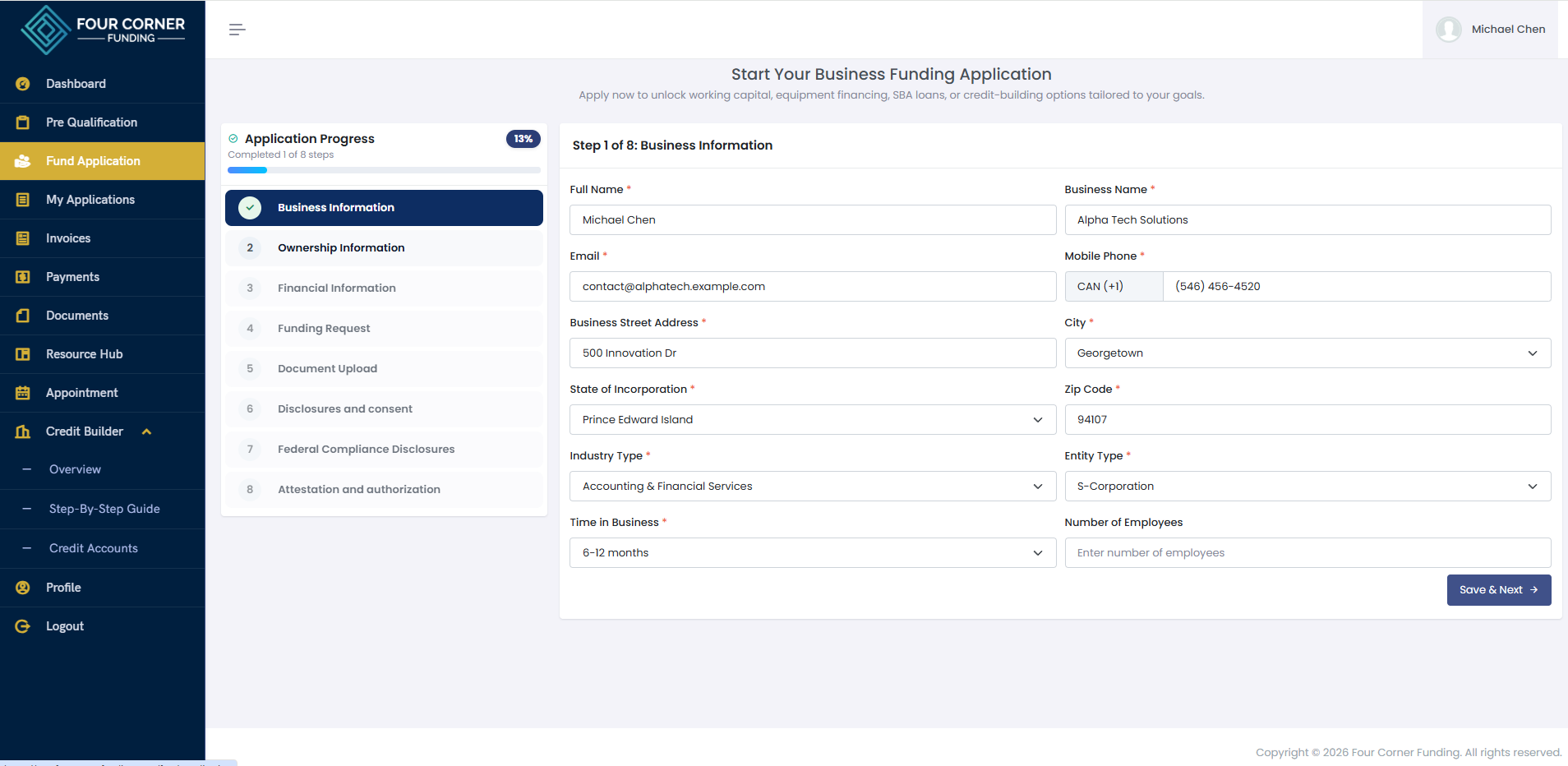
👉 Start here: https://fourcornerfunding.com/pre-qualification