Ask a business owner how the company is doing and you will usually hear a revenue number. “We did well last month.” “Sales are up over last year.” It is the figure owners know best, and the one they expect a funding source to care about most.
Then the funding source asks for something else: the last several months of business bank statements.
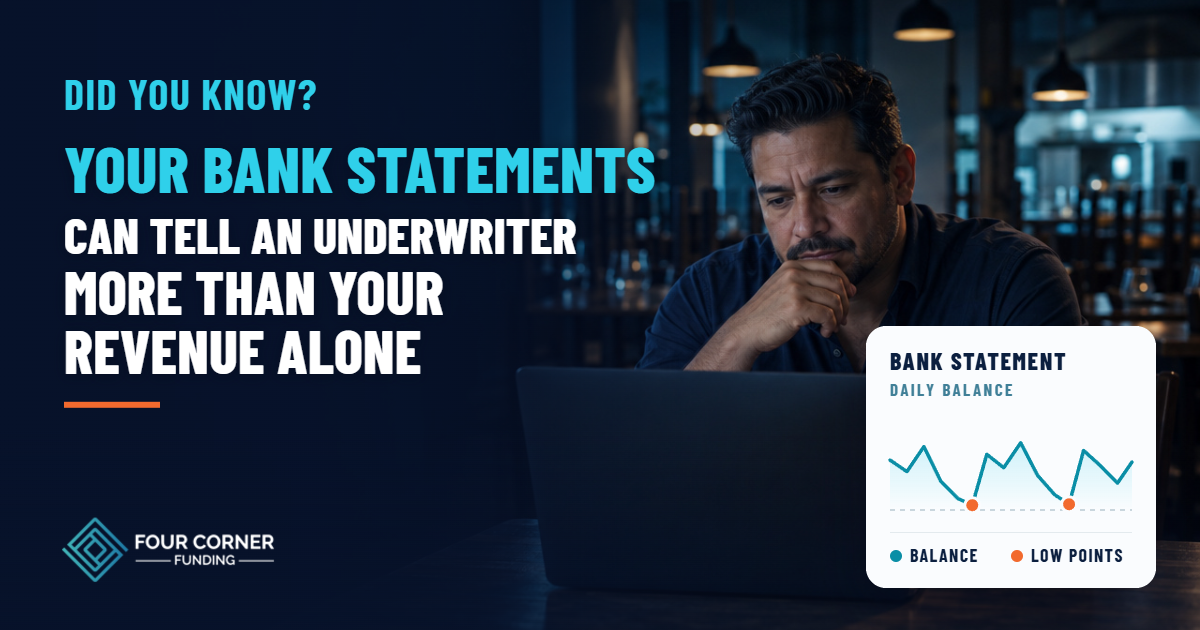
That request is not a formality. Did you know your bank statements can tell an underwriter more than your revenue alone? A revenue figure is a total. A bank statement is a record of how the business handled its money, day by day, and for many financing products it is one of the most closely read documents in the file.
Why Underwriters Ask for Bank Statements
A revenue number is something the business reports. A bank statement is something the bank produces. That difference matters. Statements let a funding source confirm that the stated sales are arriving as deposits, and they show activity that never appears in a sales total.
How much weight statements carry depends on the financing product and the funding source. For revenue-based financing and some working-capital products, banking activity may be central to the review. For other products, statements are read alongside tax returns, financial statements, credit, and collateral. Requirements vary, and so does the number of months requested.
Five Things a Statement Shows That a Revenue Figure Cannot
Every funding source reads statements its own way, and none of the items below is a pass-or-fail test by itself. These are the general areas a review may cover.
1. Rhythm: how the deposits arrive
Two businesses can deposit the same total in a month and look very different. One receives deposits steadily, most business days. The other receives two large payments and little else. A reviewer may look at how many deposits there are, how regular they are, and how much the monthly total moves from one month to the next. Seasonal or project-based businesses are not disqualified by uneven deposits, but the pattern may need explaining.
2. Cushion: what stays in the account
Average balances and low points show how much room the business keeps. An account that repeatedly drops close to zero before the next deposit lands tells a different story than one that holds a working balance through the month, even when total deposits are identical.
3. Strain: overdrafts and returned items
Overdrafts and NSF (non-sufficient funds) activity are visible on a statement, along with the fees they generate. A reviewer may consider how often they occur and how recently. An isolated item is not the same as a recurring pattern, and funding sources differ in how they treat each.
4. Commitments: what leaves on a schedule
Recurring withdrawals show what the business has already promised: loan payments, daily or weekly remittances on existing financing, equipment payments, card payments, rent, and payroll. These debits help a reviewer estimate how much of each month’s deposits is already spoken for before a new payment is added.
5. Source: where the money comes from and goes
Not every deposit is revenue. Transfers between accounts, owner contributions, refunds, and loan proceeds can all increase a deposit total without being sales. A reviewer may separate these from customer payments. Frequent transfers to and from personal accounts can also make the business’s activity harder to read.
Same Deposits, Two Different Stories
Picture two companies in the same industry that each deposited about the same amount last month.
At the first, customer payments arrive throughout the month. The balance rises and falls but never gets close to empty. A handful of predictable debits go out on the same dates each month, and nothing was returned.
At the second, most of the money arrives in two large deposits. Between them the balance runs low, the account is overdrawn twice, and a daily debit to an existing financing company comes out every business day. Part of the deposit total is a transfer from the owner’s personal account.
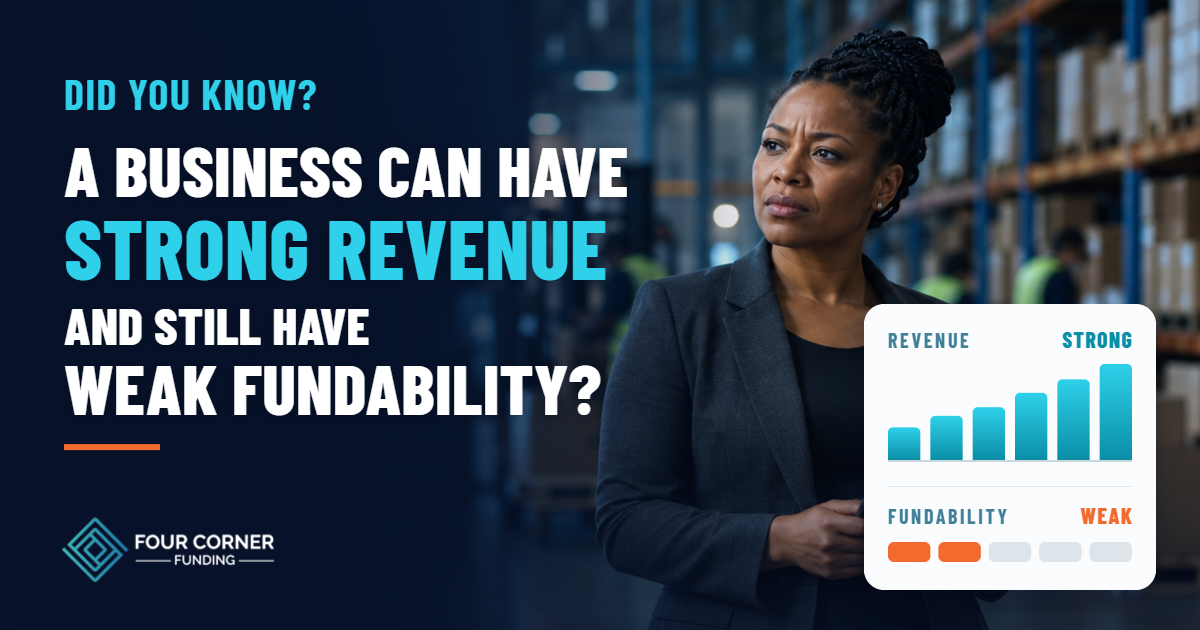
On a revenue line, these two businesses look alike. On their statements, they do not. This is the gap described in our earlier article on how a business can have strong revenue and still have weak fundability.
One rough month is not a verdict
A single overdraft, one slow month, or one low balance does not automatically decide a funding request. Reviewers generally look at patterns across several months. What tends to draw attention is repetition: the same strain showing up again and again.
What Does Not Change the Picture
When owners learn that statements matter, some try to improve the account in the last few days before applying. That rarely does what they hope.
A large deposit moved in at the end of the month raises one day’s balance. It does not rewrite the weeks before it, and a reviewer who separates transfers from sales will see where it came from. Statements describe behavior over time, so the changes that show up are the ones made early and kept up.
How to Prepare Your Account Before a Funding Request
The most useful preparation happens in the months before an application, not the week of one.
- Read your own statements first. Go through the last several months the way a stranger would. Note the low points, any returned items, and every recurring debit.
- Run business income through the business account. Deposits that land in a personal account, or in several different accounts, are harder to count as business revenue.
- Deposit consistently. Where you control the timing, regular deposits make the pattern of the business easier to see than occasional large ones.
- Keep a working cushion. Time large payments around incoming deposits where you can, so the account is not repeatedly drawn down to nothing.
- Know your recurring debits. Be able to say what each one is, what it pays for, and when it ends.
- Be ready to explain the unusual. A one-time transfer, a seasonal dip, or a large irregular deposit is easier to address when you raise it than when a reviewer finds it.
None of these steps guarantees an outcome. They make the account an accurate, readable record of the business, which is what a statement review is looking for.
Where Four Corner Funding Fits
Banking activity is one part of funding readiness, and it is read together with credit, existing obligations, documentation, and the type of financing being requested. Four Corner Funding helps business owners look at those pieces as a whole before a funding source does.
If you have a defined funding need, you can start a funding request. If you would rather understand where the business stands first, Pre-Qualification is a readiness and planning step that helps identify what may need attention. You can begin either one without a credit check.
Funding if you’re ready. A path forward if you’re not.
Know What Your Statements Say Before Someone Else Reads Them
Start a funding request, or see where your business stands first.
Your revenue is the headline. Your bank statements are the story underneath it, written one transaction at a time. The good news is that it is a story you add to every day, which means it is one you can improve.
Disclaimer: This article is for general educational purposes only and is not credit, legal, tax, or financial advice. Four Corner Funding is not a lender and does not make credit decisions. Financing is provided by independent third-party funding sources and is subject to their underwriting, eligibility requirements, product availability, and documentation requirements, all of which vary. Funding sources differ in which bank-statement factors they review and how they weigh them. Pre-Qualification and readiness results are not loan approvals or final credit decisions, and approval is not guaranteed.