The business is having its best year. Sales are up, the calendar is full, and the monthly deposits are larger than they have ever been. So the owner applies for financing expecting a quick yes, and gets a decline, a smaller offer than expected, or a long list of follow-up questions.
The reaction is almost always the same: “But look at my revenue.”
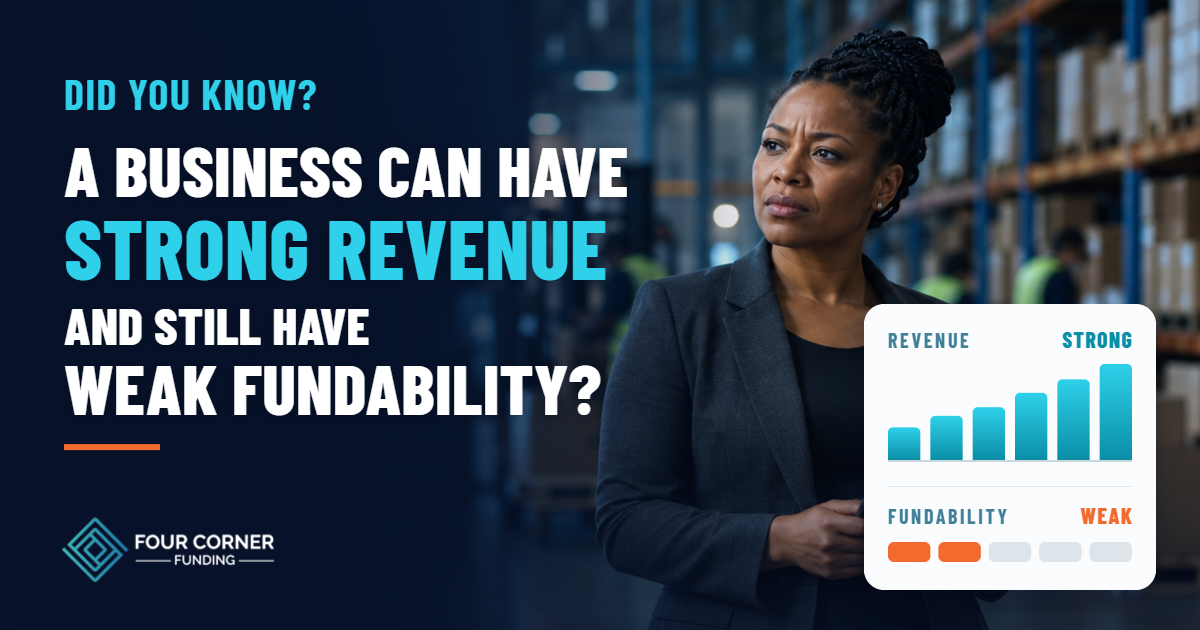
Revenue matters. It is often the first number a funding source looks at. But did you know a business can have strong revenue and still have weak fundability? The two measure different things, and treating them as the same thing is one of the more expensive assumptions a growing business can make.
Revenue Is Real Evidence. It Is Not the Whole File.
Strong sales tell a funding source something useful: customers exist, the business operates at a meaningful scale, and money is arriving. For some financing products, particularly those built around revenue and banking activity, the top line carries a great deal of weight.
But revenue measures money coming in. A financing decision is mostly about money going out: whether the business can make a new payment, on schedule, for the life of the obligation, alongside everything it already owes. That depends on what happens to the revenue after it arrives, and on the profile of the business and the owner receiving it.
Fundability is the broader picture. It describes how the whole business presents to a funding source: its credit, its banking, its obligations, its records, and whether the request itself makes sense.
Revenue answers one underwriting question.
Fundability answers many.
The Questions Revenue Cannot Answer
Think of a funding request as a set of questions. Revenue answers the first one, is money coming in?, and then goes quiet. Depending on the financing product and the funding source, a review may go on to ask several more.
Does the money stay?
Cash flow and banking. Deposits show what came in. Balances, overdrafts, and the pattern of withdrawals show what happened next. A business can deposit a large amount every month and still end most months with very little left.
What is already promised?
Existing obligations. Loans, advances, lines of credit, equipment payments, and card balances all claim part of each month’s revenue before a new payment can be considered.
Who stands behind it?
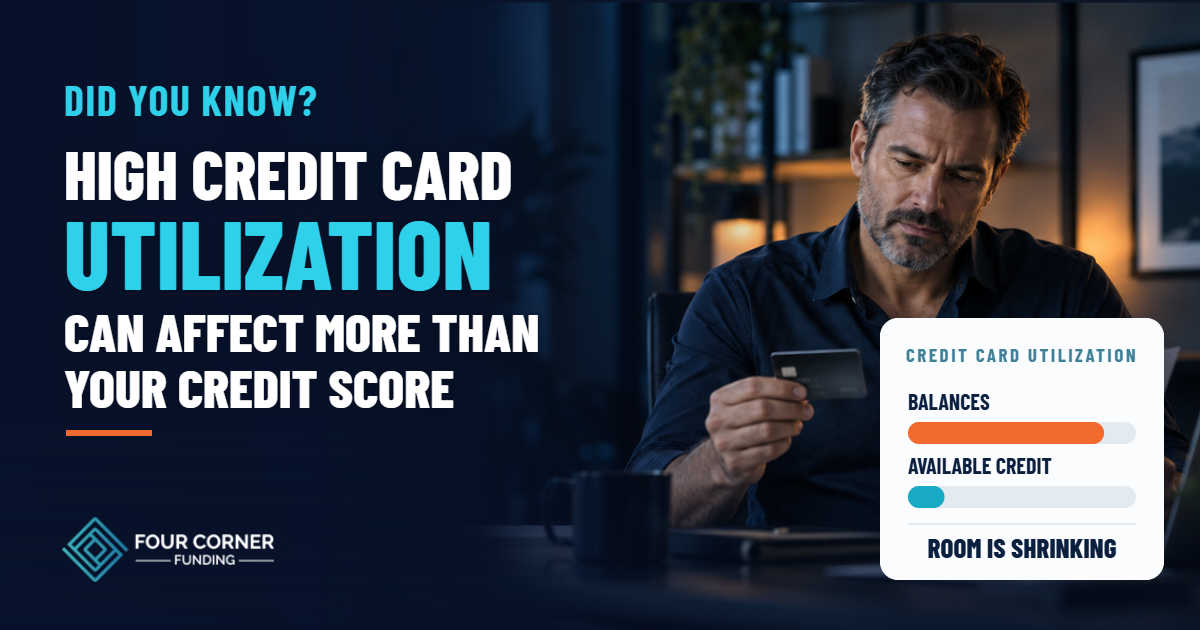
Personal credit. Many forms of business financing still consider the owner’s credit profile or involve a personal guarantee. Earlier in this series we covered why a high personal credit score does not make a business funding-ready on its own, and how credit card utilization can affect more than the score.
Does the business have its own track record?
Business credit. A business-credit profile is built from reporting accounts and payment history over time. Revenue does not create it, and forming an LLC does not create it either.
Can it be verified?
Documentation and business profile. Bank statements, tax returns, financial statements, and entity records should describe the same business. Revenue that cannot be documented clearly is harder for a funding source to rely on.
Does the request fit?
Industry, amount, use of funds, and product. The same business can be a strong fit for one type of financing and a poor fit for another. A request that does not match the purpose of the money or the size of the business can weaken an otherwise solid file.
Not every funding source asks every question, and they do not weigh the answers the same way. Requirements vary by product and by transaction. The point is that revenue speaks to only one of them.
How Strong Revenue and Weak Fundability Show Up Together
In practice, the gap between sales and fundability tends to follow a few recognizable patterns.
Growth that outruns cash. Sales are rising, but so are inventory, payroll, and unpaid customer invoices. The income statement looks healthy while the bank account runs thin. Fast growth is one of the most common reasons a busy company feels short on cash.
Revenue that is already spoken for. The business took on financing to solve earlier needs, and the payments now absorb a large share of deposits. The top line is strong, but little of it is available to support anything new.
Revenue the records cannot support. Deposits are spread across several accounts, business and personal funds are mixed, or the books are months behind. The sales may be real, but the file does not show them cleanly.
Revenue that rests on a narrow base. A large share of sales comes from one customer, one contract, or one season. Some funding sources may look at how dependable the revenue is, not only how large it is.
None of these patterns means the business is failing. Most of them describe companies that are busy and growing. They mean the revenue figure is telling a better story than the rest of the file can back up.
Why Chasing More Revenue Does Not Always Fix It
When a funding request falls short, the instinct is to sell more and reapply. Sometimes that helps. Often it leaves the actual weakness exactly where it was.
If the issue is the amount of existing debt, more sales do not reduce the payments. If the issue is documentation, more sales create more activity to document. If the issue is personal credit or a thin business-credit profile, revenue does not touch either one. In some cases growth adds strain, because more sales require more inventory, more payroll, and more waiting on receivables.
The reverse is also true. A smaller business with steady deposits, manageable obligations, clean records, and a clear use of funds may present more strongly for certain financing products than a larger business with a strained file. Size is not the same as readiness.
A better question to ask
Instead of asking, “Is my revenue high enough?” try this one:
“If someone who has never met me read this file, what would it tell them about the business?”
A Self-Check Before You Lead With Revenue
Before your next funding request, work through the questions below. They are not a scoring system, and no single answer decides an outcome. They show where the file may be thinner than the sales figure suggests.
- After a typical month’s bills and payments, how much of that month’s deposits is still in the account?
- How much of each month’s revenue is already committed to existing loan, advance, or card payments?
- Do your bank statements, tax returns, and financial statements describe the same business?
- Does business income run through a business account in the company’s legal name?
- What does your personal credit profile show today, beyond the score itself?
- Does the business have its own credit profile, with accounts that report?
- Does the amount you plan to request match what the money is for, and does the type of financing match the purpose?
If any answer is “I am not sure,” that is the place to start. An unclear answer is usually easier to resolve before an application than after one.
Where Four Corner Funding Fits
Four Corner Funding’s Pre-Qualification is built for this gap. It is a readiness and planning tool that looks at the business as a whole, including revenue, banking, personal credit, business credit, existing obligations, and the request itself, so the sales figure is read in context.
If the business may be ready, the next step can be exploring appropriate financing through independent third-party funding sources. If it is not ready yet, the goal becomes identifying which areas are holding the file back and what to work on first.
You can begin without a credit check.
Funding if you’re ready. A path forward if you’re not.
Your Revenue Is One Answer. See the Rest of the File.
Find out how your sales, banking, credit, and existing obligations fit together, and what the next step may be.
Already have a defined funding need? Apply for Funding
Strong revenue is an asset, and it earns a funding source’s attention. What keeps that attention is everything the revenue has to pass through on its way to a payment: the account, the obligations, the credit, and the records. Strengthen those, and the top line starts working the way owners expect it to.
Disclaimer: This article is for general educational purposes only and is not credit, legal, tax, or financial advice. Four Corner Funding is not a lender and does not make credit decisions. Financing is provided by independent third-party funding sources and is subject to their underwriting, eligibility requirements, product availability, and documentation requirements, all of which vary. Not every funding source evaluates the same factors or weighs them the same way. Pre-Qualification and readiness results are not loan approvals or final credit decisions, and approval is not guaranteed.