Many business owners think of credit as one thing: one file, one score, one reputation that follows them everywhere. In business financing, that assumption causes a lot of confusion.
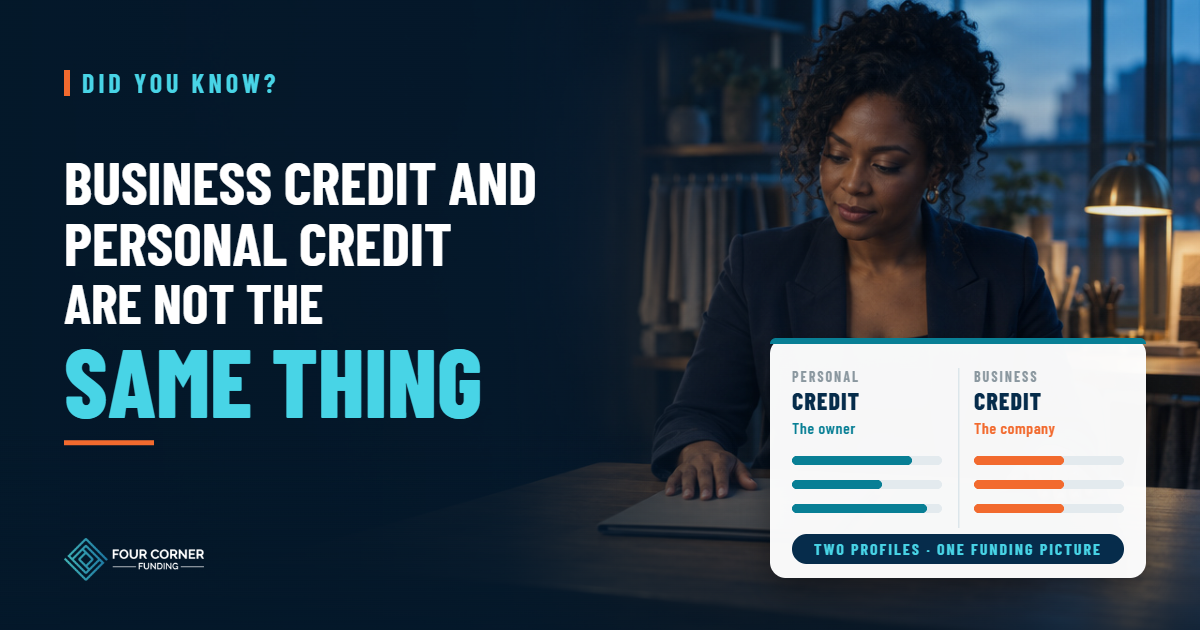
Did you know business credit and personal credit are not the same thing? They are separate profiles, kept by different bureaus, built from different information, and used in different ways. Yet many financing decisions look at both.
Knowing where each one starts and stops helps you understand what a funding source may be reviewing, and why building one does not make the other disappear.
Two Profiles, Two Different Subjects
Your personal credit profile is about you as an individual. It reflects how you have handled personal accounts such as credit cards, auto loans, mortgages, and student loans.
A business credit profile is about the company. It is tied to the business’s legal identity and reflects how the company has handled obligations that report in its own name, such as certain vendor, supplier, and financing accounts.
General comparison only. What each bureau collects and how each model scores varies.
One practical result: a business can have more than one business credit score or risk indicator, because each commercial bureau may hold different information and use a different model.
Why Personal Credit Still Shows Up in Business Financing
Here is where many owners are surprised. Even a business with its own credit profile may see the owner’s personal credit reviewed when it applies for financing. That is common, and there are good reasons for it.
Personal guarantees. Many business financing products, including many business credit cards, ask the owner to personally guarantee the obligation. When the owner stands behind the debt, the owner’s credit is relevant.
Limited business history. A newer company may not yet have enough commercial payment history for a funding source to rely on, so the owner’s profile can carry more of the weight.
Closely held businesses. In many small businesses, the owner and the company are closely connected. Funding sources may review both to understand the full picture.
Product design. Some products weigh the owner’s credit heavily. Others place more emphasis on revenue, banking, collateral, or invoices. Requirements vary by product and funding source.
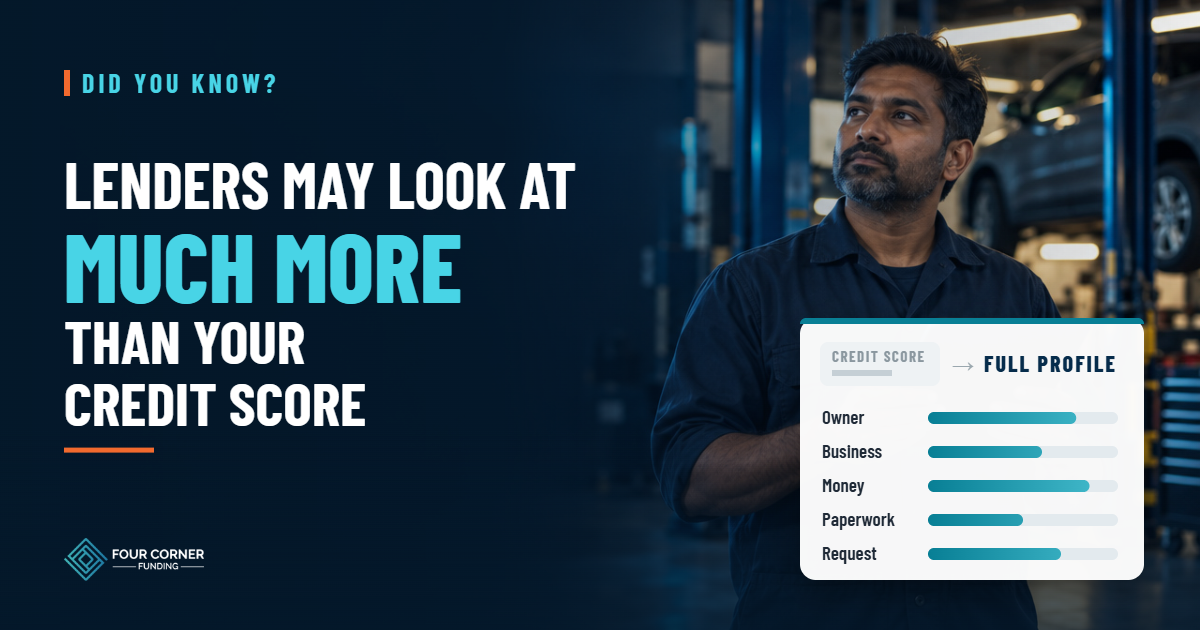
Personal credit is one of five layers of a funding profile that a funding source may review. Business credit sits in another. Most decisions involve more than one layer.
Business credit can strengthen the company’s financial identity without making the owner’s personal profile irrelevant overnight.
Four Common Misunderstandings
“Once I have an EIN, my business has credit.”
An EIN is an identifier. A business credit profile develops as accounts report in the company’s name and payment history builds. We covered this in why forming an LLC does not automatically build business credit.
“Business credit replaces personal credit.”
Business credit can become an important part of the company’s profile, but many funding sources may still consider the owner, particularly where a personal guarantee applies.
“My personal score shows how my business pays.”
A personal score reflects personal accounts. The business’s own payment history, where it exists, sits in commercial credit files.
“Business accounts never touch my personal credit.”
Not always. Some business accounts, including some business credit cards, may report to personal credit bureaus in certain situations, and practices vary by issuer and product. That is one reason credit utilization deserves attention on both sides.
Why Building Business Credit Still Matters
If personal credit stays relevant, why build business credit at all? Because it gives funding sources, vendors, and suppliers information about the company itself. As the profile develops, that can support more options for the business and give the owner’s personal profile less of the load to carry on its own.
It also does not happen instantly. Business credit is developed over time through accurate and consistent business information, accounts that report in the company’s name, and on-time payment history. There is no shortcut that turns a new entity into an established commercial profile overnight.
How the Two Work Together
The owner’s track record
Personal credit shows how the person behind the business has handled credit. It often matters most where the owner guarantees the obligation or the business is young.
The company’s track record
Business credit shows how the company has handled its own obligations. It tends to carry more weight as the profile deepens over time.
The rest of the file
Neither profile works alone. Revenue, banking, existing debt, documentation, and the request itself are usually reviewed alongside both.
Where Four Corner Funding Fits
Four Corner Funding’s Business Credit Builder is a structured system for developing a company’s foundation and commercial credit profile over time. It begins with Tier 0, Foundation & Compliance, which focuses on consistent business information and the records that bureaus and funding sources may verify, before moving through the Build, Age, Expand, and Evaluate tiers.
Pre-Qualification looks at both sides of the picture: the owner’s credit and the business’s profile, along with revenue, banking, and the request. You can begin without a credit check.
Funding if you’re ready. A path forward if you’re not.
Two Profiles. One Funding Picture.
See how your personal credit and your business profile fit together, and which one needs attention first.
Personal credit and business credit are not the same thing, and they are not competitors. The strongest position is usually one where both are understood, both are maintained, and each is doing the job it was built for.
Disclaimer: This article is for general educational purposes only and is not credit, legal, tax, or financial advice. Four Corner Funding is not a lender and does not make credit decisions. Financing is provided by independent third-party funding sources and is subject to their underwriting, eligibility requirements, product availability, and documentation requirements, all of which vary. Credit bureau and issuer practices vary and may change. Business credit development takes time, and no specific score, limit, or result is guaranteed. Pre-Qualification and readiness results are not loan approvals or final credit decisions, and approval is not guaranteed.