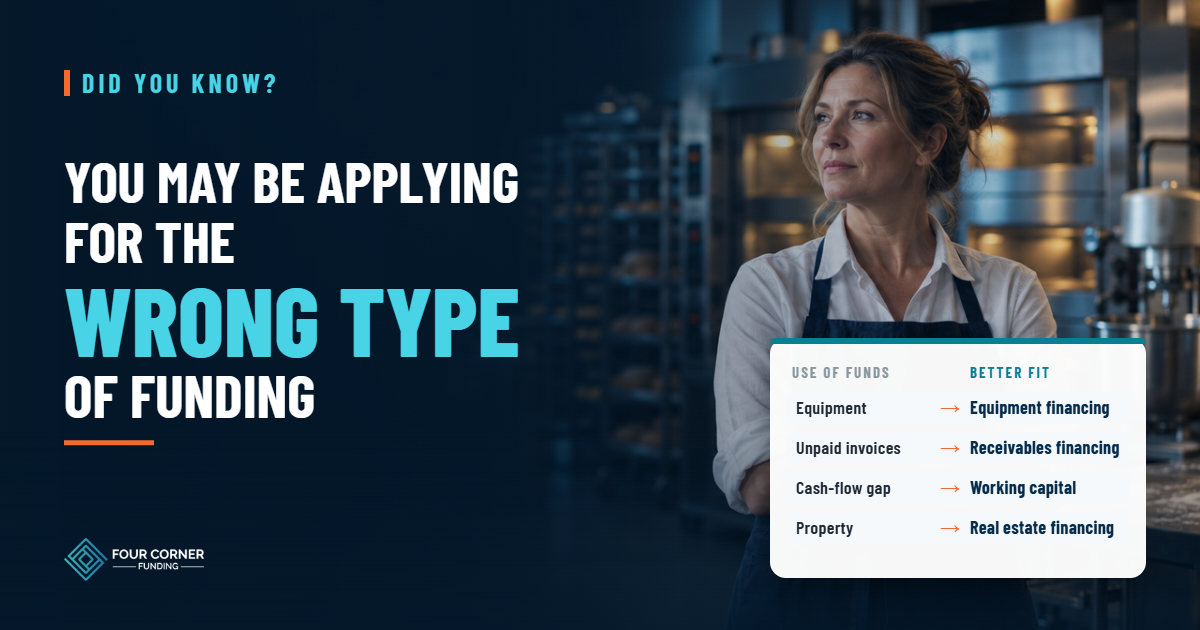
Two business owners have paid every bill on time. One has a credit history that goes back many years. The other opened their first accounts recently. Their payment records are both clean, but their profiles do not read the same way.
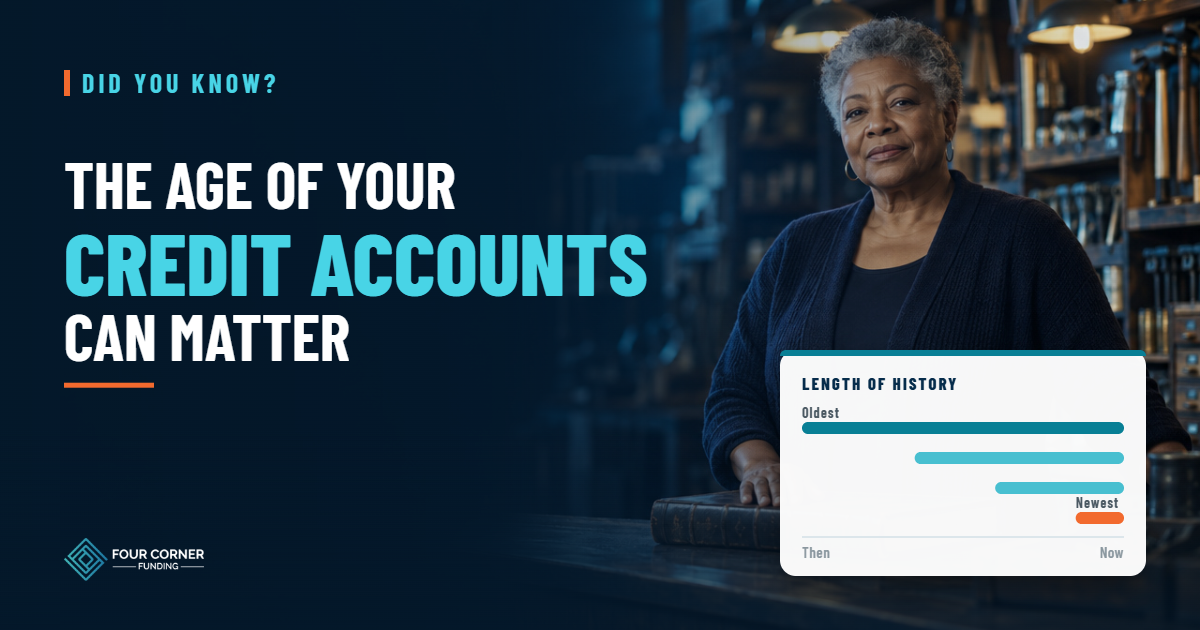
Did you know the age of your credit accounts can matter? Credit history is about how long you have been handling credit, not only how well. Length and depth give a reviewer more to evaluate, and newer profiles simply have less to show.
What “Age” Means in a Credit Profile
These ideas apply to personal credit and, in a broader sense, to business credit, where a profile also builds depth as accounts report over time.
Credit history is not only about how you pay. It can also be about how long the profile has existed.
Why Length of History Can Matter
A long history gives a funding source more evidence: years of payments through different conditions, not just a few months. A short history is not negative in itself, but it is thinner, so other parts of the file may carry more weight.
New accounts deserve particular attention. Opening several in a short window lowers the average age of the profile and adds recent activity a reviewer may notice. That is one reason we encourage a deliberate approach to new credit, as we discussed in how business credit cards fit into a larger capital strategy and why more funding applications are not always the answer.
How Different Situations May Read
Long, on-time history. Depth and a track record that shows consistency over time.
Short history. Less to evaluate, so revenue, banking, and other layers may matter more.
Several new accounts recently. A lower average age and recent activity that may prompt questions.
Closing older accounts. Closing accounts can reduce available credit right away and, over time, change how the history reads. We covered the available-credit side in how credit card utilization can affect more than your score.
How much any of this matters depends on the product and the funding source. Some weigh credit history heavily; others focus more on the business’s revenue, banking, or collateral.
What This Does Not Mean
It does not mean you should keep accounts you do not need solely for scoring purposes, especially if they carry fees or tempt spending. It does not mean opening accounts just to “build age”, since new accounts lower the average age in the short term. And it does not mean a newer profile cannot qualify for anything.
Time is the one ingredient that cannot be rushed. The practical goal is to protect the history you have and add to it deliberately.
Practical Steps
- Know which of your accounts are oldest and keep them in good standing.
- Think before closing older accounts, and understand the trade-offs first.
- Space out new credit and open accounts for a reason, not on impulse.
- For the business, start building business credit early so it has time to mature.
- Keep paying on time. Age only helps when the history behind it is clean.
Where Four Corner Funding Fits
Four Corner Funding looks at the full credit picture, personal and business, alongside revenue, banking, and the request. The Business Credit Builder includes an Age tier because business credit depth takes time to develop. You can begin with Pre-Qualification without a credit check.
Funding if you’re ready. A path forward if you’re not.
Protect the History You’ve Built.
See how your credit history may read, and plan your next step deliberately.
A strong credit history is built one on-time payment at a time, over years. The owners who benefit most are the ones who protect that history and add to it with intention.
Disclaimer: This article is for general educational purposes only and is not credit, legal, tax, or financial advice. Four Corner Funding is not a lender or a credit repair organization and does not make credit decisions. Scoring models and lender practices vary and may change. Financing is provided by independent third-party funding sources and is subject to their underwriting, eligibility requirements, product availability, and documentation requirements, all of which vary. No specific score, result, or timeline is guaranteed. Pre-Qualification and readiness results are not loan approvals or final credit decisions, and approval is not guaranteed.