Picture two businesses with the same monthly revenue. One opened eight months ago. The other has been operating for eight years. They may walk into very different funding conversations.
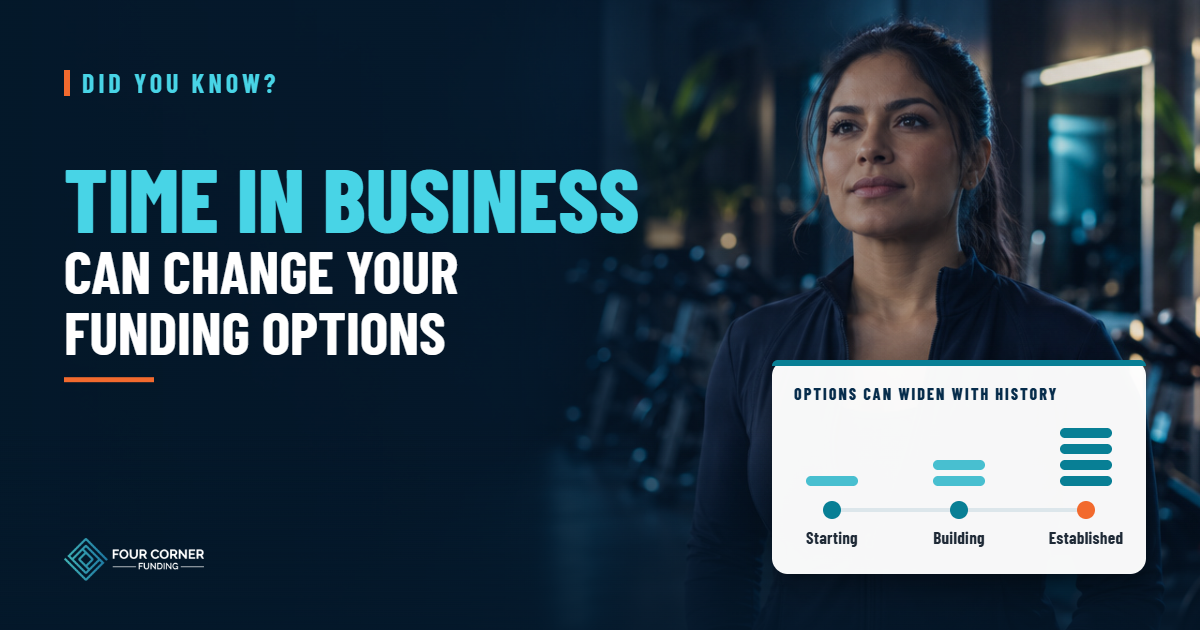
Did you know time in business can change your funding options? Operating history gives funding sources something a newer business has not had time to build: a track record. That history can influence which products are available, how much weight goes on the owner, and what documentation is expected.
It does not mean a young business has no options. It means the right capital strategy can look different at different stages.
Why Operating History Matters
A business with years behind it has shown things a funding source can review rather than predict:
- Revenue over time, including slow seasons and strong ones
- How the business handled past obligations
- Banking patterns across many months
- Tax returns and financial statements over several periods
- A business credit profile with more depth
A newer company simply has less of that history to show. Business credit in particular takes time to develop, as we covered in why forming an LLC does not automatically build business credit.
How the Picture Can Change by Stage
The stages below are general. There is no universal minimum time in business, and requirements vary by product and funding source.
New businesses and established businesses may need different capital strategies.
Time Works Together With Everything Else
Time in business is one factor, not a verdict. It interacts with the rest of the file:
Revenue and banking. A younger business with steady deposits and healthy balances may present differently from one with uneven activity.
Credit. Strong owner credit can matter more when the business’s own history is short. We explained why in how business and personal credit differ.
Collateral. Equipment, invoices, or property tied to the request can support certain structures regardless of age.
Documentation. Clean, current records help at every stage.
The reverse is also true. An older business is not automatically fundable. Weak banking, heavy existing debt, or missing records can hold back a company that has been operating for years. That is the broader point we made in what lenders may look at beyond your credit score.
If Your Business Is Young
- Build the foundation early. Consistent business information, a dedicated business bank account, and proper records from the start.
- Start business credit development. It takes time, so the earlier it begins, the more history it has when you need it.
- Keep documentation habits strong. Monthly statements, organized bookkeeping, and filed returns become your future track record.
- Match the request to the stage. Pursue structures that fit where the business is now, and avoid scattered applications that add inquiries without improving the file.
If Your Business Is Established
Use the history you have built. Keep financial statements and tax returns current, make sure business information is consistent everywhere, and review existing obligations before adding new ones. A long operating history is an advantage only when the rest of the file supports it.
Where Four Corner Funding Fits
Four Corner Funding works with businesses at different stages. For newer companies, the Business Credit Builder begins with Tier 0, Foundation & Compliance, and builds from there. For businesses that may be ready, Pre-Qualification looks at the full profile, including time in business, before exploring options through independent third-party funding sources. You can begin without a credit check.
Funding if you’re ready. A path forward if you’re not.
Build the Strategy for Your Stage.
Find out where your business stands today, and what the next step should be.
Every established business was once a new one. The time you spend building a clean, consistent history now becomes the track record that opens doors later.
Disclaimer: This article is for general educational purposes only and is not credit, legal, tax, or financial advice. Four Corner Funding is not a lender and does not make credit decisions. Financing is provided by independent third-party funding sources and is subject to their underwriting, eligibility requirements, product availability, and documentation requirements, all of which vary. There is no universal minimum time-in-business requirement; the stages above are general and not lender criteria. Business credit development takes time, and no specific result is guaranteed. Pre-Qualification and readiness results are not loan approvals or final credit decisions, and approval is not guaranteed.